
KCROC — Kuwait Computer Repair On Call

Laptop Won't Turn On (No Power)

Symptom

The laptop is completely unresponsive when the power button is pressed. No charging lights illuminate when plugged in, no fan noise is heard, and there is no visible sign of startup.

When a laptop will not turn on, the most important question is not “what part should I replace?” It is “is this actually a no-power fault?” A machine with no LEDs, no fan movement and no response needs a different diagnosis from one that powers on with a black screen or reaches the manufacturer logo and then stops. This KCROC problem page is built around that distinction, with safe checks first and technician-level diagnosis only when the external power path has been ruled out.

Technician-led diagnosis Kuwait-specific guidance

Start here

First, identify what “won’t turn on” means

People often use the same phrase for a dead laptop, a black screen and a Windows boot failure. Choosing the correct path prevents unnecessary parts replacement.

No lights + no fan + no response

Treat it as a true no-power case. Check outlet → correct charger → charging input → battery → motherboard power path.

See technician diagnosis

Charging light works but power button does nothing

Some input power is present. Investigate the power-button circuit, embedded controller, battery state and motherboard sequencing.

Lights or fans turn on but screen stays black

This is usually not a true no-power fault. Follow the black-screen diagnostic path.

Laptop black-screen problem

Logo appears but Windows does not load

Power-up succeeded; investigate boot, storage, Windows or firmware instead of the no-power path.

Windows boot problem

Laptop turns on only with charger connected

Battery health, battery connection or the charging system may be involved.

Battery service

Safe troubleshooting

What to check before opening the laptop

1

Confirm the symptom

Press the power button once and watch for any charging LED, keyboard light, fan movement, screen backlight, startup sound or blink code. If there is any consistent activity, the case may belong to a black-screen or boot-failure path instead.
2

Verify the external power path

Test a known-good wall outlet and the correct charger. Check the cable, adapter indicator and connector for damage. On USB-C laptops, use a charger and cable capable of delivering the power profile the laptop requires.

3

Inspect the charging input

Look for a loose or damaged DC jack, debris, a recessed connector or a USB-C port that does not accept charging. Do not force a plug or keep testing a port that sparks or becomes abnormally hot.

4

Remove simple variables

Disconnect docks, USB devices, external drives, memory-card readers and other accessories. On models that support it safely, perform the manufacturer-recommended power reset without opening the chassis.

5

Separate battery from board fault

A removable battery can sometimes be isolated safely and the laptop tested on the correct AC adapter. Internal battery isolation is a technician-level procedure on many modern laptops and should not be attempted just to “see if it works.”

6

Measure before replacing parts

If a known-good power source and charging input produce no response, electrical diagnosis can identify missing or collapsed power rails, input protection faults, shorted components or charging-circuit failures instead of guessing at an entire motherboard replacement.

Root causes

Common reasons a laptop has no power

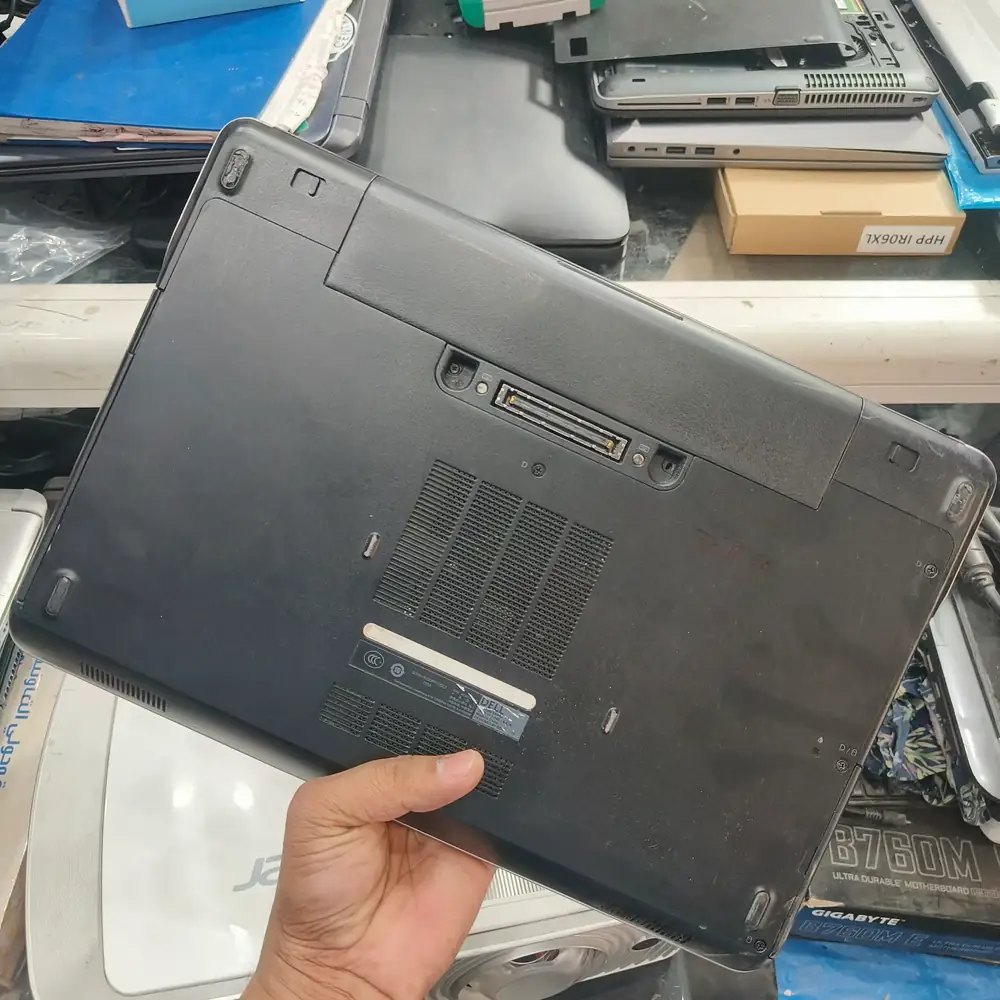
Dell Latitude chassis inspection

Inspecting the chassis and power-delivery area before deeper no-power diagnosis.

Failed or incorrectly rated charger or power adapter
Damaged DC charging jack or USB-C charging input
Dead, disconnected or shorted battery
Input protection component, fuse or MOSFET failure
Shorted motherboard power rail or charging circuit
Liquid damage, corrosion or a damaged connector
Embedded-controller or firmware fault that prevents normal power sequencing

What NOT to do

Do not repeatedly force the power button, wiggle a loose charging connector, reconnect a charger that sparks or trips its protection, puncture a swollen battery, or attempt a DIY motherboard “reflow.” If there is liquid, burning smell, sparking, melted plastic or a swollen battery, disconnect power and stop testing.

  • Stop immediately if the laptop has a swollen battery, liquid exposure, burning smell, visible sparking or melted plastic.
  • Do not keep reconnecting a charger that immediately trips, sparks or becomes unusually hot.
  • Do not open a sealed laptop solely to disconnect the battery unless you are qualified to work around internal batteries and board components.
  • Do not assume a black screen means the motherboard is dead; lights and fan activity change the diagnostic path.

Local expertise

What matters in Kuwait

Laptops used in Kuwait can move between very hot vehicles or outdoor conditions and strongly air-conditioned rooms. Let an overheated device return to normal indoor temperature before powering it if there is concern about heat exposure.

Fine dust can accumulate around ports and inside chassis openings. Dust is not proof of a no-power fault, but it can contribute to connector and cooling problems and is worth documenting during inspection.

KCROC diagnoses no-power faults from its Hawalli lab and offers free pickup and delivery across Kuwait, so customers do not need to transport a completely dead laptop themselves.

Inside the lab

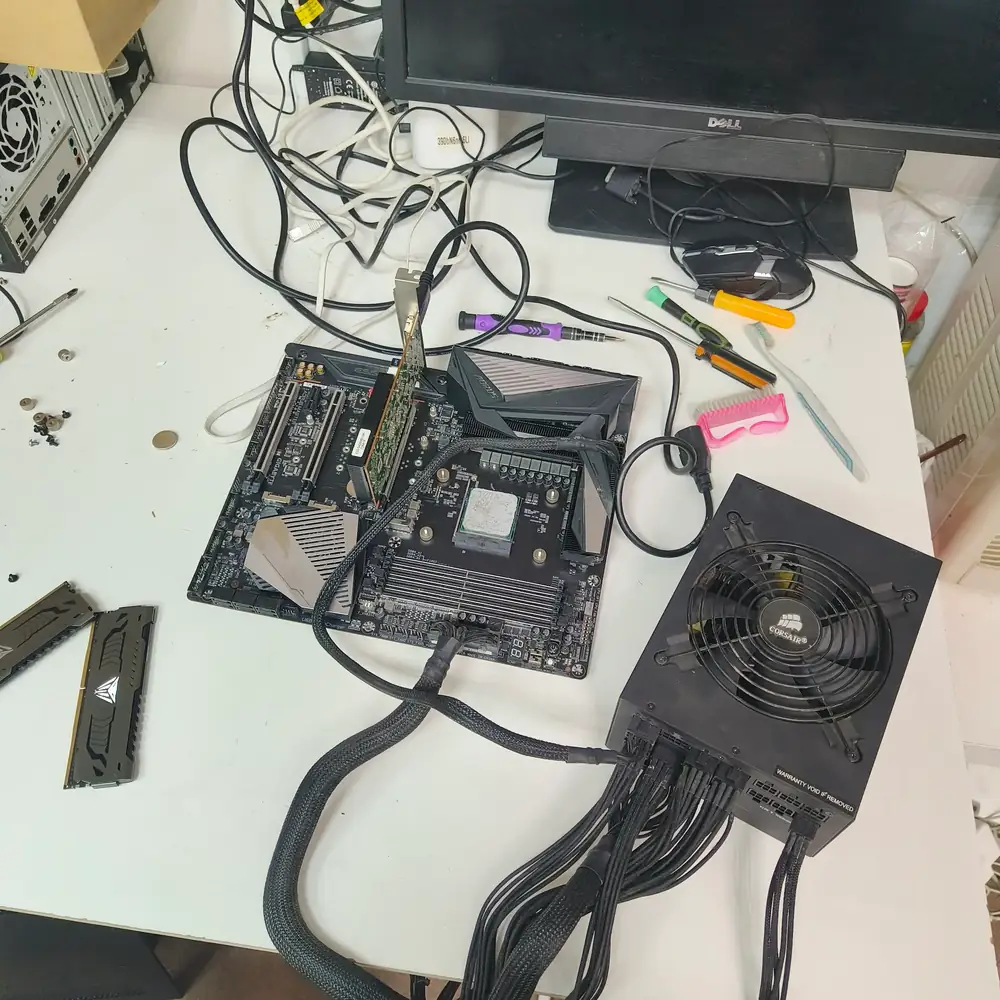
How KCROC diagnoses a genuinely dead laptop

When the external power path checks out but the laptop remains dead, the useful question is where power stops progressing through the board—not which expensive part to replace first.

1

Visual and safety inspection

Inspect the chassis, charging connector, battery condition and signs of liquid or corrosion before energizing a suspicious machine.

2

Input voltage verification

Confirm that the correct adapter is delivering the expected input and that power reaches the laptop’s charging/input stage.

3

Resistance and short testing

Measure relevant rails and compare readings to the board design to identify a rail being pulled down by a short or failed component.

4

Power-rail sequencing

Trace the always-on and startup rails to determine where power stops progressing through the board.

5

Thermal and component isolation

Where appropriate, controlled testing and thermal imaging can help localize a component creating an abnormal heat signature on a shorted rail.

6

Repair and post-repair validation

Repair the confirmed fault at component level when practical, then verify startup and perform stability testing before the device is returned.

The KCROC approach

Diagnose first. Repair the failed stage.

KCROC works from the outside in: verify the power source and correct adapter, inspect the charging input, isolate the battery when appropriate, then measure the motherboard power path if the laptop remains genuinely dead. On board-level cases, the objective is to locate the failed stage—such as an input MOSFET, fuse, charging IC, shorted capacitor or damaged rail—before deciding whether a component repair or board replacement makes financial sense.

Brands and devices covered

The diagnostic approach applies across major laptop designs; the exact hardware path varies by model.

Repair services

Handled under

First-party proof

A real no-power repair from our Hawalli lab

Questions customers ask

Laptop won't turn on: FAQ

Why is my laptop completely dead even when plugged in?

Start with the wall outlet and the correct charger. If both are known good and there is still no charging light, fan activity or other response, the fault may be the charging port, battery, input protection, charging circuit or motherboard power rails. Measurements are needed to separate those possibilities.

Can a dead battery stop a laptop from turning on?

Yes, depending on the laptop design and how the battery has failed. Some models can operate from the correct AC adapter with the battery isolated, while others can behave differently when the battery or its connection is faulty. A swollen battery should not be repeatedly charged or tested.

Why does my charger light turn off when I plug it into the laptop?

On some adapter designs, an indicator that goes out when connected can indicate the adapter is entering protection because of an overload or short on the laptop side. A faulty adapter can cause similar behavior, so controlled testing with a correct known-good adapter is safer than repeated reconnection.

My laptop has lights and fan noise but no picture. Is that a no-power fault?

Usually not. Lights or fans show that at least part of the power system is active. The more appropriate path is black-screen or POST diagnosis, which can involve RAM, the display system, BIOS/UEFI, GPU or motherboard initialization.

Can I use a phone USB-C charger to test my laptop?

Only if it supports the USB Power Delivery profile and wattage the laptop requires. A connector can fit while the charger is still too low-powered to start the laptop. Use a manufacturer-approved or correctly rated USB-C PD charger for a meaningful test.

Will holding the power button for 30 seconds fix a dead laptop?

It can clear residual power or reset a controller that is stuck, but it cannot repair a failed charger, broken jack, shorted component or damaged motherboard. Treat it as a safe reset step, not a guaranteed repair.

Is a laptop that will not turn on automatically a motherboard replacement?

No. The cause can be the outlet, charger, charging jack, battery, cable, firmware or a localized board-level component. A diagnosis should identify the failed stage before an entire motherboard is replaced.

Can my files stay safe if the laptop has a no-power motherboard fault?

Often, the goal of repair is to restore the original board rather than replace it. Whether data remains accessible depends on the device design and the nature of the damage. KCROC diagnoses the original hardware first and does not assume a board replacement is necessary.

Real repair evidence

This page links to a documented KCROC repair case rather than using a generic “success story” claim. The linked case study records the device, diagnosis, repair method and outcome.

Updated September 10, 2026Technical guidance by KCROC • Hawalli, Kuwait